Products
Knowledge & Support
Explore our Knowledge Hub:
Tips & Advice Education Area Case Studies The Grant House Virtual House FAQs Glossary Visit the Knowledge HubProducts
Knowledge & Support
Explore our Knowledge Hub:
Tips & Advice Education Area Case Studies The Grant House Virtual House FAQs Glossary Visit the Knowledge Hub
Helen Rishworth-Cutler
Content & Communications Manager, Grant UK Expertise: General Renewable Heat emitters OilHelen joined Grant UK’s Marketing Department in January 2015 as an administrator supporting the day to day running of the G1 Installer Scheme and assisting the wider Marketing Department.
In her current role, in addition to overseeing the G1 installer loyalty programme, Helen looks after Grant UK’s customer communications as well as writing the copy content for use in print and online, including copywriting for PR, brochures, blogs, social media and emails. Helen works closely with Grant UK’s Sales, Technical and Training Teams with content output, producing case studies, support resources and the Company’s Podcast, the Net Zero Heating Show.

First Class BA Hons Degree English Literature
Read Helen’s Latest Articles

Air Source Heat Pumps Renewable
Heat pump running costs – what can you expect from an Aerona heat pump system?
An air source heat pump heating system is a highly efficient and environmentally friendly way to heat your home. The running costs of a heat pump are an important consideration for homeowners when researching this type of renewable heating. In this blog, we showcase some real-world Grant Aerona 290 heat pump installations, share their running costs and explain some of the factors which can affect bills.

Renewable
Air Source Heat Pump Installation Guide – what homeowners need to know
Air source heat pumps are a low carbon heating solution that homeowners can install at their homes to fulfil their heating requirements. With lots of choice, the heat pump market can be a confusing place for consumers so in this blog, we will explain some of the key considerations homeowners should be aware of when planning an air source heat pump installation.

Renewable
What is the Boiler Upgrade Scheme?
The Boiler Upgrade Scheme (formerly known as the Clean Heat Grant) is open to applicants in England and Wales currently offering grants of £7,500 towards the installation of an air source heat pump to replace their existing boiler. A temporary increase to £9,000 for eligible oil or LPG‑heated homes has been announced by the Government and is available for applications submitted on or after 21st July 2026. To be eligible, installations must meet the Scheme criteria so to learn more about these requirements, please read this blog for the answers.

Air Source Heat Pumps
Heat Pump Grants and Incentives in the UK
In January, the Government launched its Warm Homes Plan which commits £15bn of public investment and home upgrades designed to help homes save on energy bills and reduce fuel poverty. Amongst the headlines, we want to break down what this means for homeowners and explain the financial support available for air source heat pumps.

Renewable
What is R290 Refrigerant?
Air source heat pumps use refrigerants to absorb heat energy from the air outside and convert it into useable energy to heat our homes and hot water. For the last few years, R32 refrigerant has been widely used in heat pumps but, as heat pump technology continues to evolve, so too has the choice of refrigerants used in heat pumps with R290 emerging as an alternative. In this blog, we will explain R290 refrigerant and its role in home heating.

Renewable
What is the Home Energy Scotland Grant and Loan Scheme?
The Home Energy Scotland (HES) Grant and Loan Scheme provides eligible homeowners with a grant, an interest free loan or combination of both that can be used towards the costs of installing renewable technology in their homes, including air source heat pumps. In this blog, we explain more about what the HES Scheme is, the funding available and its eligibility requirements.
Technical Heat emitters
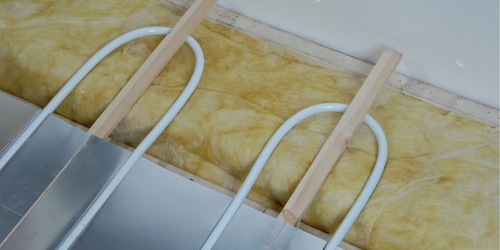
Underfloor Heating for Suspended Floors
Underfloor heating systems can be installed on suspended floors but there are some important installation considerations that installers need to note. In this blog, we will explore the topic of suspended floors and how solutions, such as heat emissions plates, can make UFH a viable heat emitter choice for this type of floor construction.

Renewable
How to get started with renewable heating at home
A renewable heating system can help a household not only reduce their dependency on fossil fuels but it is a more sustainable solution for fulfilling their space heating and hot water demands. Planning the installation of a renewable heating system can appear daunting so in this blog, we will break down the key steps involved in making the move to low carbon heating.

Heat emitters Renewable
Low Profile Underfloor Heating – what you need to know
Low profile underfloor heating systems make this type of heat emitter a viable option for almost any home. Simple to install, causing minimal disruption to a home’s interior and suitable for installation as either a screeded or non-screeded system, Grant UK’s Uflex MINI underfloor heating system boasts many advantages. In this blog, we will explain the main facts homeowners need to know about low profile underfloor heating.

Technical Renewable
Multi-zone wiring centre for Grant heat pumps
The EP001 wiring centre is cleverly designed to bring together and simplify the wiring connections of a multi-zone control system for an air source heat pump and house them in one single enclosure. In this blog, we take a closer look at how the Grant EP001 wiring centre works.

General Oil Renewable Heat emitters
How to order a Grant heating system
Upgrading your heating system is a home investment so it often involves many hours of research, conversations and calculations to ensure that an informed decision is made to choose the right solution. In this blog, we go back to basics to talk homeowners through the different steps they need to take when ordering a Grant heating system.

Renewable General
Getting your home heat pump ready
Preparing your home with energy-efficiency improvements and high levels of insulation is key to getting the best out of an air source heat pump. In this blog, we talk through the different measures you can install to help improve your home’s efficiency and get it ready for a heat pump.