Products
Knowledge & Support
Explore our Knowledge Hub:
Tips & Advice Education Area Case Studies The Grant House Virtual House FAQs Glossary Visit the Knowledge HubProducts
Knowledge & Support
Explore our Knowledge Hub:
Tips & Advice Education Area Case Studies The Grant House Virtual House FAQs Glossary Visit the Knowledge HubRadiator and valve control systems - getting the most from your heat emitters
Radiator and valve control systems can help homeowners manage the temperatures of each of their rooms, making tailored adjustments when necessary and working with the wider heating system controls which look after when heat is produced by the heat source. Thermostatic radiator valves, room thermostats, programmers and correctly balanced radiators can improve comfort, reduce unnecessary heating and ultimately help your heating system work better.
Your heat emitters, which typically will be radiators, play an important role in keeping your home warm. While the heat source (an oil boiler or air source heat pump) produces heat, radiators are the vehicle through which this heat is transferred from the system into your rooms. Most radiators will have valves which regulate the flow of water through them, allowing you to control individual radiators and make room-by-room adjustments.
Correctly used, radiator valves can help minimise the wastage of heat and regulate the amount of heat delivered to an individual room whereas room thermostats and smart heating controls manage the wider heating system and when it operates.
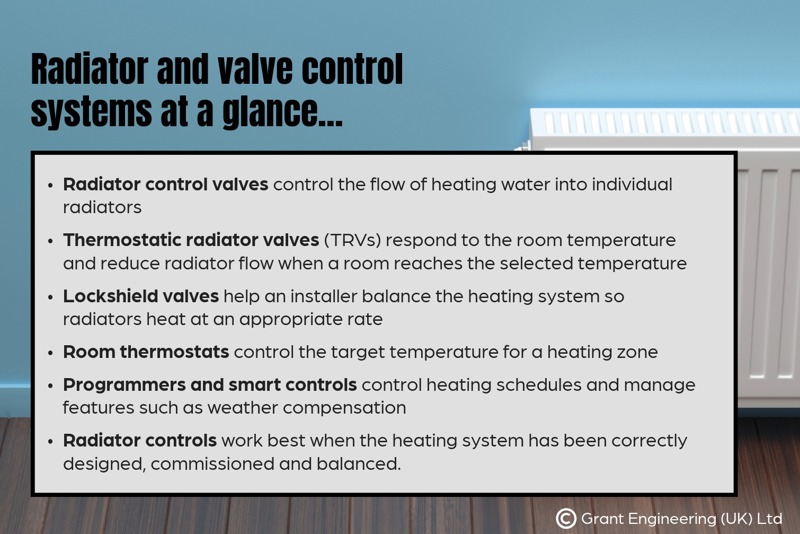
Here, we will explain the difference between manual valves, thermostatic radiator valves, lockshield valves and smart radiator valves, as well as covering radiator balancing and the importance of coordinating thermostats so they do not conflict with the wider heating controls.
Quick links for this article…
In this blog, we will explain:
What are radiator and valve control systems?
Radiator and valve control systems are the components that regulate the delivery of heat from the central heating system into a room by controlling the flow of heated water through a radiator. In summary, your boiler (or heat pump) produces heated water and this is carried through pipework in your home to radiators. Radiator valves regulate the speed and volume of water flowing through each radiator and this controls how much heat is transferred into the room via the radiator’s surface area.
Radiator valves:
control the heat output of each radiator
manage the flow of heated water through a radiator
are typically a thermostatic radiator valve (or control valve) and a lockshield valve.
What types of radiator valves are available?
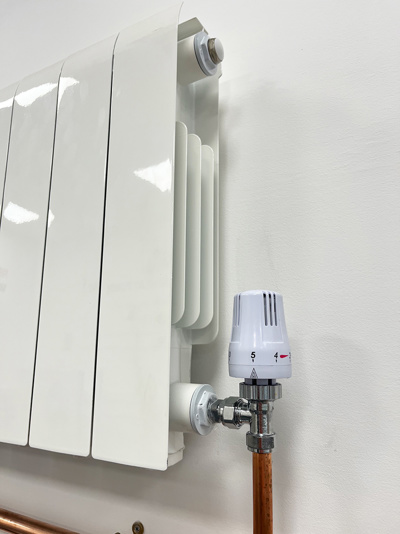
There are several types of radiator valve, including manual radiator valves, thermostatic radiator valves (TRVs) and lockshield valves, which each carry out a different role. A manual radiator valve is a basic flow-control valve which homeowners can turn to either increase or reduce the flow of water into a radiator. Manual radiator valves require the homeowner to physically adjust the valve in order to make a radiator warmer or cooler and they are not managed by other controls or thermostats. Manual radiator valves will typically be found on older systems or on radiators which require minimal control or adjustments.
While a manual radiator valve controls water flow by hand, a thermostatic radiator valve responds automatically to the room temperature.
What is a thermostatic radiator valve?
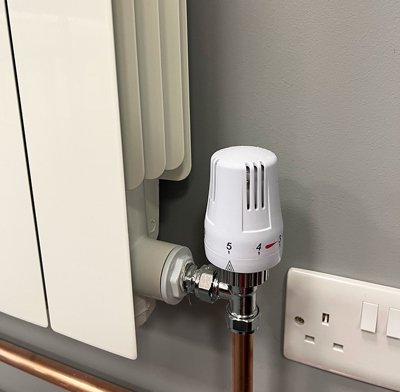
A thermostatic radiator valve, often called a TRV, regulates the flow of heated water into a radiator as a direct response to the air temperature around the valve. A thermostatic radiator valve reduces the radiator output when the room reaches the desired temperature and increases the water flow through a radiator when the room cools. A typical thermostatic radiator valve will comprise of a numbered dial which represents different temperature settings and an internal temperature sensitive element, usually a wax element or liquid or gas filled sensor, which reacts to the temperature of the room.
When the air temperature around the radiator cools, the wax element or sensor inside the TRV contracts allowing a spring-loaded mechanism to open the valve to allow more hot water to flow through the radiator. As the room warms up and reaches the desired temperature selected on the valve, the TRV’s wax element or sensors expands in size and gradually closes the valve to reduce the flow or stop of hot water through the radiator.
A thermostatic radiator valve will continually adjust the flow of water to help maintain a comfortable temperature in the room the radiator is located in. A TRV will not make a radiator heat up a room faster but a TRV set to a higher temperature setting will allow a room to reach higher temperatures before the valve restricts the flow.
Typically, the lower settings on a TRV’s numbered dial will achieve room temperatures of between 12 ºC -16ºC, the middle setting will be approximately 20ºC and the higher settings will achieve room temperatures of between 24ºC -28ºC. Thermostatic radiator valves allow different temperatures to be set in different rooms; for example, a warmer temperature setting may be selected in a living room and a lower TRV setting selected on a radiator in a bedroom.
What is a lockshield valve?
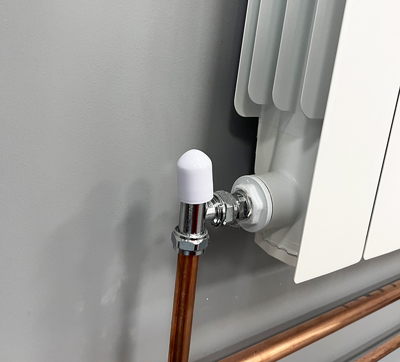
A lockshield valve controls the mass flow rate of hot water through the radiator to ensure that heat is evenly distributed throughout the wider home. A lockshield valve is a small plain capped fitting positioned at the opposite end of a radiator from the TRV or manual control valve. A lockshield is manually adjusted by an installer or heating engineer and set to restrict the flow of water to balance the heating system. The lockshield valve should not be altered or used by a homeowner to make everyday temperature adjustments.
While a thermostatic radiator valve (TRV) allows homeowners to adjust the temperature of an individual room, a lockshield valve helps share heat around the home and is set by the heating engineer during the balancing of a central heating system. Incorrectly adjusting the lockshield valve can result in rooms being poorly heated and can impact radiator performance.
In summary, the lockshield valve balances how much water the radiator can receive while the TRV automatically regulates that flow to keep the room at the desired temperature.
How do thermostatic radiator valves improve room-by-room comfort?
Thermostatic radiator valves improve room-by-room comfort by allowing each radiator to respond to the temperature of the room it is in. TRVs automatically adjust the heat a radiator gives out which helps homeowners keep a room at a temperature they prefer rather than heating the whole house equally. A thermostatic radiator valve can prevent rooms from overheating and maintain comfort levels in rooms which are regularly used because a TRV will gradually restrict hot water flowing through a radiator in a room which has hit target temperature while other rooms can continue to call for heat.
Thermostatic radiator valves respond to changes in heat levels. Sunlight in a south-facing room, cooking in a kitchen, people and electrical appliances, such as TVs, in a living room can each warm a room without the heating system doing anything differently. A TRV can reduce a radiator’s heating output when these extra heat sources raise the room temperature.
Thermostatic radiator valves can give homeowners more control over the home heating. Homeowners can use TRVs to adjust individual rooms to suit how they use them throughout the day and night, rather than relying on one central thermostat to represent the temperature of the entire house. It is important to note, however, that thermostatic radiator valves are not designed to replace room thermostats – each heating zone will still require a room thermostat to be positioned correctly within the area it is controlling and TRVs must not conflict with it.
How do radiator valves work with thermostats and programmers?
Radiator valves, room thermostats and programmers each perform different control functions within a heating system. A programmer controls the wider heating system operation, a room thermostat controls the temperature for a particular heating zone and a radiator valve controls the flow of hot water into each individual radiator regulating the amount of heat a radiator delivers.
Here is an example of how a programmer, room thermostat(s) and radiator valves work together. On a cold morning, the programmer will activate the heating before you get up. If a room thermostat detects that the area in which it is installed is too cold, it will call for heat. Radiators with TRVs will then respond to the temperatures in their respective rooms, reducing the flow of hot water to those rooms only when each room has reached its desired temperature.
What does a room thermostat control?
A room thermostat monitors the air temperature in a particular area, compares it with the chosen target temperature and signals to the heating system to either provide heating or stop provide heating to the zone. If the temperature in an area or zone falls below the desired temperature setting, the room thermostat will trigger the heating system to fire up. Once an area or zone is up to temperature, the room thermostat will then signal to the heating system to pause the firing up process and stop calling for heat from the boiler or heat pump.
Room thermostats must be suitably positioned within an area in order to work effectively. Room thermostats must not be located behind curtains, above a radiator or heat source, or in direct sunlight because each of these variables could affect the thermostat’s reading of the accurate room temperature. Every home heating system will be designed differently but, in most cases, a room thermostat will be positioned downstairs and another located upstairs to help control specific temperatures within the same floor of a house.
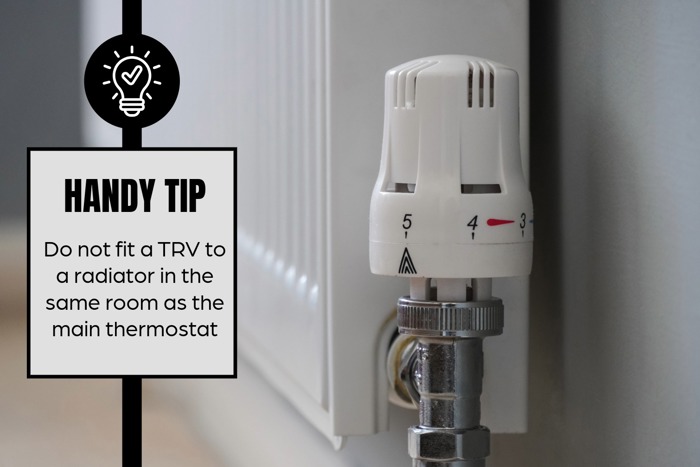
The positioning of a room thermostat needs careful consideration when using TRVs – as mentioned previously, TRVs should not be fitted onto a radiator which is located near to a main room thermostat.
What does a heating programmer control?
A heating programmer controls the scheduling of a heating system allowing homeowners to set specific times for their heating and hot water to switch on and off. A heating programmer can be used to set daily and weekly schedules for heating periods and domestic hot water production, depending on the controller type. Heating programmers can vary in their abilities from simple controllers through to more sophisticated controllers. For example, the Grant Aerona Smart Controller is an example of an air source heat pump heating programmer which also offers additional functionality, such as weather compensation and remote monitoring and control.
Heating programmers manage the timing that your heating system will operate particular functions. Heating programmers do not control individual radiator temperatures but instead work with room thermostats to ensure rooms or areas are at the desired temperatures which are set in the heating programmer’s scheduling. A heating programmer can be used to make your rooms warmer during occupied hours, such as first thing in the morning and in the evening, and setback to slightly lower temperatures during unoccupied periods, for example during the night or working hours of the day.
The scheduling set up in a heating programmer should match the heating hours and domestic hot water production with the household’s routine, helping the heating system to meet a home’s requirements effectively while also supporting the efficient operation of the heat source.
How should homeowners think about the controls together?
A correctly configured heating system uses each type of control for its specific role without interfering or conflicting with one another. A programmer sets heating periods, a room thermostat monitors a heating zone and radiator valves fine-tune individual room temperatures. When each of these controls are set up correctly, they can help keep a home comfortable while avoiding unnecessary energy use.
In summary, to get the most out of a central heating system, it is more than just choosing the right heat source and radiators – it is also about understanding how heating controls work together:
A programmer decides when your heating and hot water is scheduled to run, allowing you to match heating and hot water times to your daily routine
A room thermostat decides when the target temperature in a particular area has been reached, signalling to the heat source when to provide heat and when to stop
A thermostatic radiator valve (TRV) decides how warm an individual room should be by regulating the flow of hot water through an individual radiator
A lockshield valve helps balance water flow between radiators, ensuring heat is evenly distributed across the radiator system.
What is radiator balancing and why does it matter?
Radiator balancing is the process of adjusting the water flow through individual radiators to help distribute heat more evenly throughout all radiators in the home. A balanced heating system helps prevent some radiators from becoming hot very quickly while other radiators remain slow to warm up. Let’s explain more…
Hot water does not flow evenly through a central heating system. For example, radiators closest to the boiler or heat pump can receive more hot water than those radiators further away. Without appropriate radiator balancing, this can result in some rooms warming up quickly while others remain colder for longer.
Balancing involves carefully adjusting the lockshield valves on radiators to regulate the flow of hot water to ensure that each radiator receives the appropriate amount of water for its size, position and heating requirements. Radiator balancing should only be carried out by a heating engineer and not the homeowner. It will usually be done following a new heating system installation, after radiator replacements, an extension, when changes have been made to the system pipework or during servicing and troubleshooting. Once balancing has been completed, lockshield valves should not be adjusted by the homeowner.
Radiator balancing helps a heating system share available heat evenly between rooms. A correctly balanced system can help improve comfort because it ensures that radiators throughout a property receive appropriate flow that reflects the heating system design, rather than allowing those on the nearest pipework route to receive the most heat.
Radiator troubleshooting
If you have some radiators which are colder than you would expect, incorrect balancing could be a cause (although there are other factors which can impact radiator performance). If you have any concerns, it is worth contacting your heating engineer.
Ask your installer or service engineer if:
Some radiators heat slowly while others become very hot
Upper-floor rooms remain cooler than lower-floor rooms
A radiator has been replaced or moved
A boiler or heat pump has been upgraded
The system has persistent noise, cold spots or uneven room temperatures.
Can smart radiator valves improve heating control?
Smart radiator valves are electronically controlled TRVs which allow app-based room-by-room control of compatible radiator systems. Smart radiator valves usually replace the manual head of a thermostatic radiator valve and allow homeowners to set different room schedules, make temperature adjustments remotely and, depending on the model, they can integrate with other smart heating controls.
Traditional thermostatic valves use a manual dial to regulate radiator temperature whereas smart radiator valves are controlled by a supporting app where homeowners can set and adjust their settings. Smart radiator valves offer a convenient way for households to control their heating, especially when they have different routines or use some rooms more frequently than others. With smart radiator valves, homeowners can adjust individual room temperatures using an app allowing different rooms to be managed independently even when away from the home.
It is important to note that not all heating systems and radiators are compatible with smart radiator valves. Before smart radiator valves are fitted, a heating engineer should check their suitability and compatibility with the wider system. As with traditional TRVs, the settings for smart radiator valves must not conflict or interfere with the wider control settings for a heating system.
How do radiator valves work with heat pumps?
Radiator valves work on a heat pump system in the same way they work with a traditional high temperature oil-fired boiler but how they should be used is different. Radiators valves, such as TRVs, can be installed on radiators connected to a heat pump and they can be used to make minor adjustments to set an optimum room temperature. However, TRVs and other types of radiator valves should not be used to completely switch off a radiator.
A heat pump system is a low temperature heating system which works best when it can deliver heat steadily and maintain adequate water flow. The heat pump, radiator sizing and system operation will have been designed together based on certain operating parameters being in place. If radiator valves are incorrectly used to completely switch off a radiator, removing its ability to provide heat to a room, this may have a negative impact on the wider heating system. For example, if too many radiator valves close at once, they can restrict water circulation and potentially reduce the efficiency of the heat pump and its wider operation.
The use of radiator valves on an air source heat pump system must be considered during the heat pump system design.
In summary, if you have a heat pump, once your room temperatures are at their desired levels, it is recommended to leave your radiator valves and TRVs alone. If you have any questions about your system and whether radiator valves can be set differently, please contact your installer.
What common radiator valve problems affect heating performance?
Radiator valve problems can reduce room comfort, cause uneven heating or prevent a radiator from working properly. A radiator valve issue can be mechanical, hydraulic or related to the system controls so homeowner or their installers should carry out troubleshooting checks before assuming a valve replacement is required.
Examples of common radiator valve problems include:
Stuck thermostatic radiator valve – this can occur when the internal mechanism or valve pin becomes stuck. This can happen due to age of the valve or when a radiator has been unused for a long period of time.
Faulty thermostatic radiator valve – this can occur when a TRV no longer responds accurately to changes in temperature which may be due to the temperature sensing mechanism becoming worn or damaged.
Incorrectly adjusted lockshield valve – if a lockshield valve has been incorrectly adjusted, some radiators may receive too much hot water while other do not receive enough.
Leaking radiator valves – if damp patches or water droplets can be seen around the valve or if corrosion/discolouration can be seen on nearby pipework or there is a regular need to top up the pressure on a sealed system, this may indicate a leak around a valve.
Why is one radiator cold while other radiators are hot?
A radiator remaining cold when other radiators are warm can be caused by several reasons. A cold radiator is a common heating problem and is usually caused by a simple issue such as a closed radiator valve, stuck TRV pin or trapped air in the radiator.
Here is some troubleshooting support for cold radiators but if you are unsure, please speak to your heating engineer:
A stuck thermostatic radiator valve is a common cause for a cold radiator – firstly check that your TRV is turned up to a suitable setting. If the radiator remains cold, the valve may need inspecting by an engineer (please avoid forcing the valve as this could cause damage).
Trapped air inside the radiator can stop hot water from circulating through the radiator properly. If the top of your radiator is cold but the bottom is warm, this could be an indication of trapped air – you could try bleeding the radiator to release the air but only do so following manufacturer instructions.
A cold radiator can also be caused by an incorrectly adjusted lockshield valve. If one radiator consistently heats up more slowly than the others, the system may need balancing so you will need to speak to your heating engineer.
Sludge and debris building up in the radiators and pipework can restrict water circulation and reduce heat output. If your radiator has persistent cold spots and does not heat evenly, your heating engineer may need to investigate whether sludge is causing an issue and whether flushing the system is necessary.
Sometimes a cold radiator can be caused by the radiator valve being accidently turned off or it has developed a fault. Firstly, check that the radiator valves have not been turned down or closed – if the settings are correct, a heating engineer may need to check the valve for a fault.
If a radiator remains cold, despite the valves appearing to work correctly, this may be an indication of a wider circulation issue with problems caused by the pump, pipework or heating controls.
Why does a radiator stay hot after the room feels warm?
A radiator can stay hot, even after a room is at its desired temperature, due to the radiator valve not being able to sense the air temperature correctly or the valve mechanism not closely correctly. Here are some things to consider if you have a radiator hotter than you expect:
Even after the heat source has switched off, a radiator will hold hot water and the radiator metal will retain heat so it is completely normal for a radiator to take time to cool down.
If the room thermostat is positioned in a cooler room, it may be calling for heat even when other adjacent rooms already feel warm so this can sometimes explain why a radiator may remain hot even in a warm room (this is more common on a system not using TRVs).
Thermostatic radiator valves respond to the temperature of the air around them so if furniture, curtains or radiator covers are obstructing the valve, these can affect the temperature around the TRV and the radiator valve will continue to allow hot water through.
If the boiler is still circulating hot water, for example some systems continue running the pump briefly after the burner stops, this may explain a warmer than expected radiator.
Why does a radiator make noise?
A radiator can make a noise because water is flowing through it, air is trapped inside, there is excessive pressure within the system, or the metal that the radiator is made from is expanding and contracting as it heats up and cools down. Common radiator noises include:
Gurgling and bubbling – if your radiator is gurgling or bubbling, this may indicate that air is trapped or water is flowing unevenly. If the radiator is cold at the top and warm and the bottom, it may need bleeding.
Ticking, clicking or popping (especially when heating starts up or stops) – a metal radiator, pipes and brackets will expand and contract with temperature changes so this can make a clicking sound and this is quite normal.
Hissing or whistling – a radiator making a hissing or whistling sound can be caused by water passing through a valve which is partially closed or excessive flow or a pressure/flow imbalance in the heating system. A heating engineer should be contacted to investigate further.
Banging, knocking or hammering – these sounds can be caused by pipes moving against floorboards, joists and brackets as they heat up. Persistent banging or knocking can indicate a circulation or valve problem which will require a heating engineer to investigate.
If other parts of your boiler heating system are making noises, please refer to our Oil Boiler Troubleshooting Support page.
How can homeowners get more from their existing radiators?
Homeowners can often get significantly more heat from their existing radiators by using controls correctly, keeping radiators unobstructed and by getting their heating system checked each year with an annual service. The key to maximising radiator performance is to improve heat transfer, remove circulation problems and reduce heat loss from the home. If you have a conventional radiator central heating system, there are a few ways you can get more from your existing radiators.
If you notice your radiators are cold at the top, there may be trapped air preventing hot water from filling the whole radiator. Bleeding your radiators can help clear this – with the heating off and the radiator cool, use a radiator key to release the air until water fills the whole radiator. If you have Grant Afinia radiators, please read our more detailed guidance to how to bleed an Afinia radiator on sealed system and our step-by-step guide to how to bleed an Afinia radiator on an open vented system.
Regularly check your radiator valves, if you have them. Make sure thermostatic radiator valves are not stuck or turned down too low; instead, TRVs need to be set to suit the room in question, ensuring the valve sensing area is unobstructed.
Keep radiators clear by moving sofas and other large furniture away from radiators and make sure long curtains do not cover radiators. Keeping radiators clear will allow warm air to circulate around the room instead of trapping heat behind the furniture.
If you notice that some of your radiators are heating up quickly while others remain lukewarm, this may mean the system needs balancing. A heating engineer will need to carry out this process, adjusting your radiators’ lockshield valves to help distribute hot water evenly around your home.
Are radiator and valve controls right for your heating system?
Radiator and valve controls are found on most wet central heating systems but their use and correct set-up depends on the heat source, property layout, radiator design and household routine. Radiators valves correctly used are usually a great way to help homeowners achieve room-by-room comfort in their home but they should be considered as part of the wider heating system controls and not as isolated components.
Heating programmers, thermostatic radiator valves, lockshield valves and thermostats each have their own role within a heating system and their use must complement the wider system. Radiator valves provide homeowners with a solution to manage room-by-room comfort and lockshield valves support radiator balancing to ensure even heat distribution. If you have a heat pump, TRVs can be used on your radiators but their settings and use must be factored in during the heat pump system design phase to ensure they support, rather than hamper, the heat pump’s operation.
If you have any queries about your radiators and how they are working, please refer to troubleshooting support for your heating system or contact your heating engineer.
Was this article useful?
Have more questions? Submit a request
Are you a professional? View our Professional Support Centre
Couldn't find what you were looking for?
Alternatively you can speak to a member of our team - Subject to Operating Times