Products
Knowledge & Support
Explore our Knowledge Hub:
Tips & Advice Education Area Case Studies The Grant House Virtual House FAQs Glossary Visit the Knowledge HubProducts
Knowledge & Support
Explore our Knowledge Hub:
Tips & Advice Education Area Case Studies The Grant House Virtual House FAQs Glossary Visit the Knowledge HubWhat are the common radiator valve problems?
Common radiator valve issues include stuck TRVs, faulty or inaccurate TRVs, incorrectly adjusted lockshield valves and leaky radiator valves. Radiator valves are designed to improve home comfort and reduce the wastage of heat energy but if they stop working properly, you may notice your heating system not working as normal. Here is some troubleshooting support about radiator valve problems.
If your room temperatures are colder or warmer than desired or you notice a radiator is cooler than expected or if you see damp patches around a radiator, these could all be signs that there is an issue with a radiator valve on one or more of your radiators. You may be able to identify these signs but, in most cases, you will need to speak to your heating engineer to fix or resolve the radiator valve issue.
If you are unsure about the types of valves you have installed, such as thermostatic radiator valves, lockshield valves or smart radiator valves, please read our guide to radiator and valve control systems which explains how each of these valves work. Pictured below are two of the most common types of radiator valves with a thermostatic radiator valve shown on the left and a lockshield valve shown on the right.
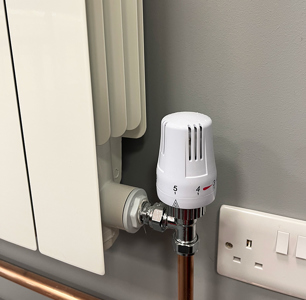
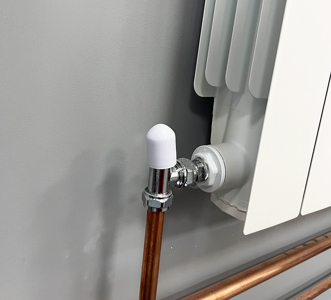
Common radiator valve problem - a stuck TRV
A stuck TRV (thermostatic radiator valve) is one example of a problem with a radiator valve. The internal mechanism or valve pin in a thermostatic radiator valve can become stuck and this usually happens with older valves or those fitted to radiators which have not been used for some time. A stuck thermostatic radiator valve can prevent hot water from entering the radiator or stop the valve from regulating the water flow correctly.
A thermostatic radiator valve which is stuck will cause a radiator to be colder than desired. You should not apply force to fix the valve but instead speak to your heating engineer to inspect the radiator and valve further.
Common radiator valve problem – a faulty or inaccurate TRV
A thermostatic radiator valve (TRV) may no longer respond accurately to room temperature changes if its temperature sensing mechanism becomes worn or damaged. A faulty or inaccurate thermostatic radiator valve can result in a room becoming too warm or remaining cold when heat is required, even when the valve position is correctly set.
If you notice a room temperature being warmer or colder than expected, you should check whether the thermostatic radiator valve’s dial is correctly set and ensure that the radiator and valve are not obstructed by curtains, furniture or other objects. A suspected faulty TRV should be checked by a heating engineer and if required, replaced with a new TRV.
Common radiator valve problem – lockshield valves incorrectly adjusted
Lockshield valves help balance water flow between all of the radiators within a heating system. A lockshield valve which has been incorrectly adjusted can cause some radiators to receive too much hot water while others do not receive enough. Incorrectly adjusted lockshield valves can result in uneven heating throughout your home with radiators closer to the heat source, a boiler for example, warming up faster than those positioned further away.
To fix a lockshield valve which has been adjusted incorrectly, a heating engineer will need to rebalance the system. Radiator balancing involves adjusting lockshield valves to help distribute water appropriately throughout the system, ensuring that all radiators heat up at the same, even rate.
Common radiator valve problem – leaking radiator valves
A leak around a radiator valve can cause water to escape from the heating system and, in some instances, draw unwanted air into the heating system. Depending on the location and severity of the leak, this can lead to water damage, pressure loss in a sealed system or reduced heating performance.
Signs of a leaking radiator valve include:
Damp patches or water droplets forming around the valve
Corrosion or discolouration on nearby pipework
A recurring need to top up the pressure of a sealed heating system.
If you suspect a leak on your system or around your radiators, please contact your heating engineer.
Other problems with radiator valves
Radiator valves can become stiff or difficult to turn because of their age, wear and internal deposits. Older radiator valves can be harder to use to adjust room temperatures and wear or internal debris can prevent a valve from operating properly. If a valve is difficult to turn, avoid using excessive force as this can damage the mechanism inside the valve or cause a leak. Your heating engineer will be able to assess whether a radiator valve needs servicing or replacing.
The information provided here is advice only - if you are not happy to check your product, please contact a heating engineer to assist.
Was this article useful?
Have more questions? Submit a request
Are you a professional? View our Professional Support Centre
Couldn't find what you were looking for?
Alternatively you can speak to a member of our team - Subject to Operating Times