Correctly installed air source heat pump heating systems will heat your home efficiently and effectively for many years. We have put together this guide to help homeowners who are thinking about a heat pump for their home, explaining some of the common heat pump installation mistakes and how to avoid them.
Heating Solutions for Homeowners
Are you a Heating Professional?
Products
Knowledge & Support
Explore our Knowledge Hub:
Tips & Advice Education Area Case Studies The Grant House Virtual House FAQs Glossary Visit the Knowledge HubProducts
Unsure what you need?
Use our product finder tool
Knowledge & Support
Explore our Knowledge Hub:
Tips & Advice Education Area Case Studies The Grant House Virtual House FAQs Glossary Visit the Knowledge Hub
Common Heat Pump Installation Mistakes – A Guide for Homeowners
|
Heat pumps operate differently to traditional fossil fuel central heating systems. Air source heat pump heating systems therefore need to be designed differently, factoring in their low flow temperatures, larger heat emitters and correct controls. Heat pumps should only be installed by suitably trained, qualified installers who understand how to correctly specify and install this sustainable heating technology. In this blog, we provide an overview of heat pump installation mistakes and how homeowners and their installers can avoid these.
Quick links for this blog…
In this blog, we will explain:
Heat pump installation mistake 2 – poor placement of the heat pump
Heat pump installation mistake 3 – inadequate emitter design (radiators and underfloor heating)
Heat pump installation mistake 5 – incorrectly set-up heating controls
How Grant UK supports installers with heat pump training and installations
Why is system design so important with heat pumps?
Air source heat pumps operate most efficiently when the temperature of the water flowing through the system is low, for example at 35ºC-45ºC. A low temperature heat pump will effectively heat your home provided the system has been appropriately designed factoring in any heat loss escaping from your home and selecting the correct heat pump output, cylinder size and heat emitters to meet your requirements. While an oversized, incorrectly designed gas boiler may create high energy bills, it will likely still heat your rooms; however, a poorly designed heat pump system will result in a poorly performing heat pump which will have high running costs and will not achieve your comfort levels.
This is why it is important that installers do not cut corners when planning your heat pump system and why heat pump installation mistakes must be avoided.
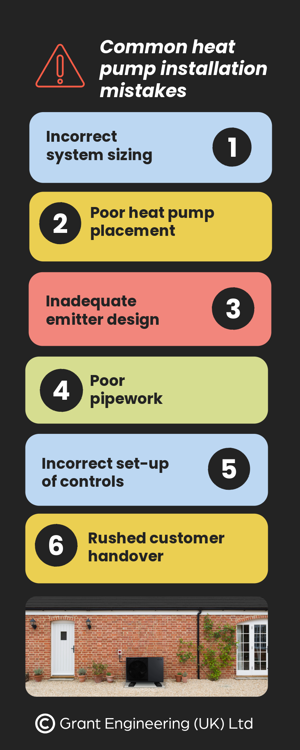
Mistake 1 – incorrect system sizing
If the wrong size of heat pump is installed in your property, the heating system will either not be able to keep your home warm or it will operate very inefficiently. An undersized heat pump with a lower heating output than your property demands will result in a system which cannot achieve your desired comfort levels. Meanwhile, an oversized heat pump which has a heating output that is significantly larger than the space heating and hot water demands of your home will likely operate with lower efficiencies because it will be constantly short cycling (short cycling occurs when a heat pump repeatedly switches on and off over short periods because it is producing more heat than the property requires. This prevents the heat pump from operating in longer, more efficient cycles).
Every good heat pump installation must start with your installer carrying out a room-by-room heat loss calculation on your home. A heat loss calculation will ascertain how much heat is escaping from your property and will determine the amount of heating input needed to keep your home warm. This calculation can then be used to confirm the correct size of air source heat pump needed to efficiently meet your home’s desired room temperatures and hot water demand.
It is your heat pump installer’s responsibility to complete a full heat loss survey on your home but the good news is Grant UK’s in-house Design Team are here to help installers with heat loss calculations and system sizing for Grant heat pump systems.
Mistake 2 – poor placement of the heat pump
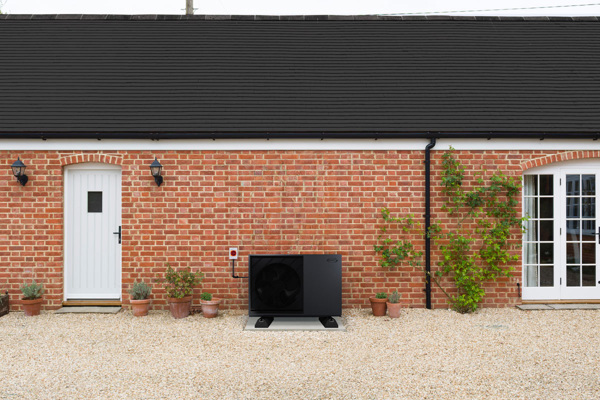
The positioning of an air source heat pump can have an impact on the unit’s performance. Your installer should discuss with you the various factors that need to be considered before finalising the best location to site your heat pump. Here are some of the mistakes to avoid when locating a heat pump:
Positioning the heat pump within a constricted area – heat pumps need sufficient space around them to allow for plenty of airflow around the unit. Air source heat pumps need a steady flow of air in order to operate so if this is restricted in any way, the heat pump will not be able to work properly. A heat pump also needs minimum space around it to allow for easy access for servicing and maintenance and also for safety.
Installing a heat pump on an uneven surface – heat pumps must be installed on a solid, even base which is able to support the weight of the unit. The base should be designed to minimise the transmission of noise and vibration because an unsuitable or uneven surface may increase operating noise and potentially cause damage to the heat pumps and its components. A suitable base must be prepared prior to installation and, in most installations, installers will position the heat pumps on anti-vibration feet or mounts. Heat pumps should not be installed on inclines of more than 5º or on surfaces such as grass or loose gravel/stones.
Positioning the heat pump without considering local weather conditions – your air source heat pump will need to be installed outside, typically alongside an external wall or out-building, and when deciding the best position to site your unit, your installer should factor in local weather conditions. For example, a heat pump should not be installed where strong wind blows directly onto the heat pump or where it is very dusty. Where possible, the heat pump should be in a place where it will be free from adverse weather conditions as much as possible.
Installing a heat pump with inadequate condensate drainage – as part of its operation, an air source heat pump will produce condensate water which must be safely and effectively discharged away from the unit. This can be achieved through suitable drainage being in place around the heat pump to allow the condensate to flow away freely and not accumulate and pool around the unit. If suitable drainage is not in place and the condensate is allowed to build up around the heat pump, this may cause problems for the heat pump’s operation and can also be a safety issue in colder conditions if the condensate freezes on the ground around the heat pump creating a slip hazard.
There are many more considerations to factor in when positioning a heat pump, such as neighbouring properties, noise levels and safety precautions, so your installer must ensure the positioning of your heat pump complies with the manufacturer’s installation guidelines.
Mistake 3 – inadequate emitter design (radiators and underfloor heating)
As mentioned earlier in this blog, air source heat pumps work best when their flow temperatures are lower and to effectively transfer this heat into your rooms, a larger surface area is needed. Undersized or incorrectly specified heat emitters are a common source of heat pump system performance issues. When designing a new heat pump system, your existing radiators should be assessed to check if they are suitable for low-temperature systems and to ensure they provide adequate surface area for the system design.
A couple of common misconceptions around heat pump systems is that they always require new radiators or they only work with underfloor heating. For some homes, the existing radiators may not be suitable for a heat pump and it is true that underfloor heating is an excellent heat emitter for heat pumps. However, for many homes, their existing radiators can be used alongside fitting some new radiators to achieve the required heat emitter surface area. Meanwhile, underfloor heating may be an option for properties undergoing an extension or retrofit installations where a low-profile underfloor heating system is the best solution.
Mistake 4 – poor pipework
A series of pipes located internally and externally will connect your heat pump to the wider heating system. Your heat pump installer will need to ensure that the pipework is suitable for a new heat pump system, being of the correct diameter and size. In addition, the pipework should be suitably insulated to reduce heat loss and to prevent the water flowing through the pipework from freezing when exposed to sub-zero temperatures. Incorrectly sized and inadequately insulated pipework will cause problems for a heat pump system and hamper efficiency.
Pipework sizing and insulation is an area covered in the air source heat pump and system design training provided by Grant UK to installers.
Mistake 5 – incorrectly set-up heating controls
The role of the controller managing your heat pump system cannot be underestimated. Incorrectly set-up heating controls can result in poor system performance, lower efficiency, higher running costs and colder room temperatures. It is therefore essential that your heat pump controller, such as the Aerona Smart Controller, is correctly set up during the installation and commissioning of your system and that you understand what settings you can alter and what settings you should leave.
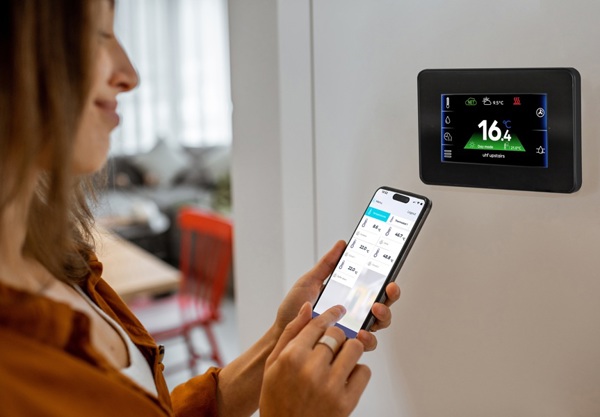
Your heat pump controller manages when your heating comes on and off, schedules your domestic hot water and plays a significant role in helping your heat pump to work as efficiently as possible. When setting up your heat pump, your installer will enable weather compensation and setback control which can improve heat pump system efficiency.
Weather compensation allows the external temperatures outside to influence how your heat pump works – when it is warmer outside, weather compensation control will reduce the flow temperature running through your heat pump system (reducing the heat pump’s workload) while still achieving desired room temperatures whereas, when the temperature gets colder outside, the flow temperature is increased to ensure your comfort levels are sustained.
Meanwhile, setback control is scheduled to prevent a heat pump from being completely switched off. Instead, a setback control schedule will set a series of ‘energised’ and ‘setback’ periods for the heat pump, achieving warmer room temperatures during occupied periods and reducing the room temperatures slightly during unoccupied periods. With setback control, your heat pump continues to operate at a steady output and prevents your home’s room temperatures from dropping too low.
If weather compensation is incorrectly set or a setback control schedule conflicts with other settings, this can cause issues with the system. This is why correct set-up heating controls are a crucial part of the installation and handover of a heat pump system.
Mistake 6 – rushed customer handover
Heat pump heating systems work differently to a conventional gas boiler central heating system so it is imperative that you and your household understand how it works. After installing, testing and commissioning the system, your installer should complete a thorough handover of the heating system so that you feel confident about its operation, the controls and what to expect. A rushed customer handover or the absence of a handover altogether can result in a homeowner not understanding the system or potentially altering their controls which could impair performance.
An installer’s handover of a heat pump system should:
provide an overview of how the system works
talk you through the key differences you may notice with a heat pump compared to a high temperature boiler
explain the importance of regular visual checks of your heat pump
talk through your heating and hot water schedules and how you can adjust these if necessary
explain heat pump energy usage and the benefits of researching heat pump electricity tariffs and agile tariffs
highlight the importance of an annual heat pump service.
How Grant UK supports installers with heat pump training and installations
Here at Grant UK, we strive to support all our customers by providing resources and sharing knowledge about our products. This is why we share tailored support for homeowners who are researching heat pumps or are already living with this low-carbon heating system. It is also why we have a dedicated Training Academy where heating engineers and installers can access product training and industry qualification courses. Working closely with installers and providing them with heat pump training and other courses, we have developed our G1 Installer network that homeowners can use.
Choosing your heat pump installer
If you are looking for a heat pump installer in your area, you can use the Grant UK Find an Installer search. It is recommended to contact more than one installer so that you can obtain several quotations to review and compare. When contacting installers, you can ask them about their experience and qualifications and, if you are planning a heat pump installation using Government funding, you will need to ensure they are MCS accredited as well.
Here are some other resources to support your heat pump installer research:
Subscribe to Grant News
Receive the latest news and updates about Grant products and services